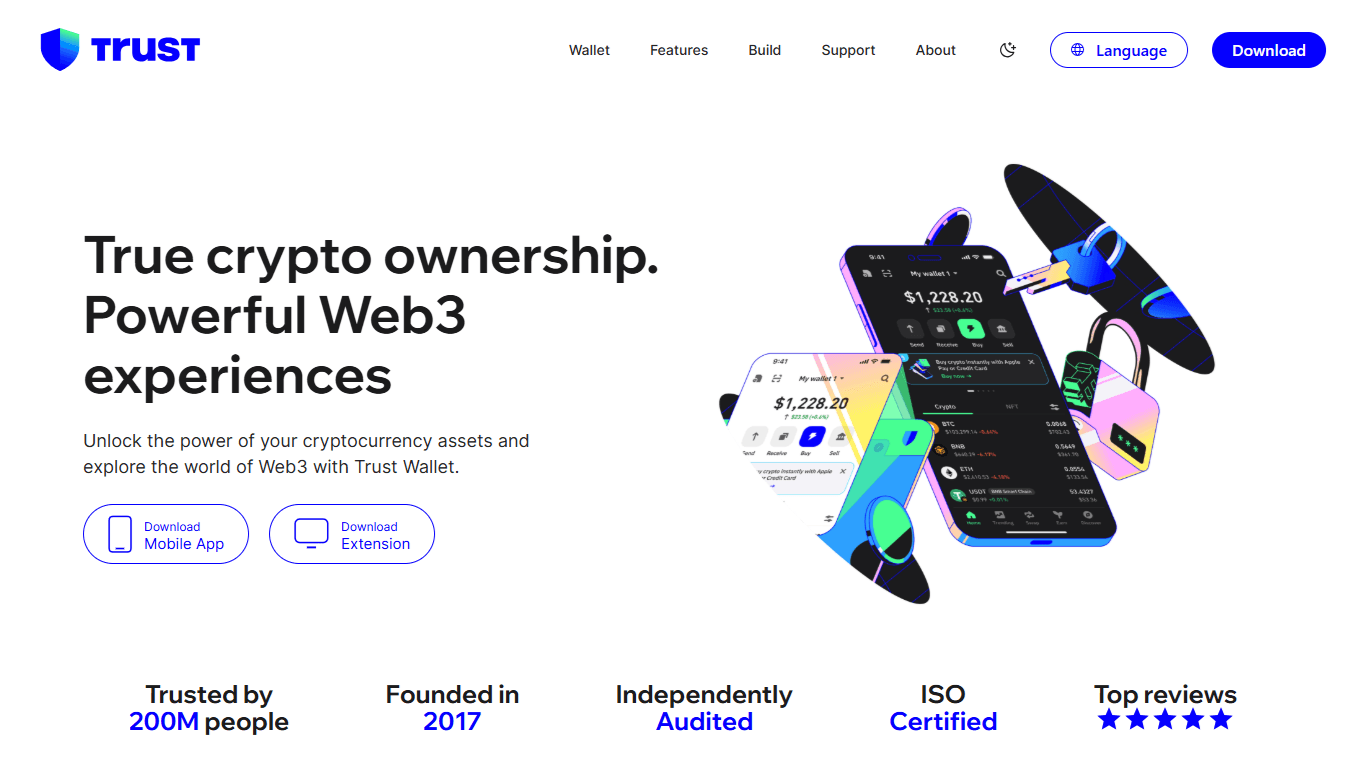
Trust Wallet: A Complete 1200-Word Guide to the Popular Multi-Chain Crypto Wallet
Trust Wallet has become one of the most widely used non-custodial crypto wallets globally, offering a secure and flexible way for users to store, manage, and interact with thousands of digital assets. The rise of decentralized finance, NFTs, blockchain gaming, and multi-chain ecosystems has made self-custody more important than ever, and Trust Wallet stands out as a simple yet powerful tool designed for beginners and advanced users alike. This guide explores everything you need to know about Trust Wallet—how it works, what makes it unique, how to get started, and how to use its wide range of features safely and efficiently.
What Is Trust Wallet?
Trust Wallet is a decentralized, self-custody crypto wallet that allows users to store, send, receive, and swap a vast range of digital assets. As a non-custodial wallet, it places full control of private keys and secret phrases in the hands of the user. This means no third party, platform, or organization has access to your funds. You are the only one who owns your assets.
Trust Wallet supports multiple blockchain networks, including:
Bitcoin
Ethereum
BNB Smart Chain
Solana
Avalanche
Polygon
Tron
And thousands of other networks through custom RPC
Its compatibility with numerous blockchains makes it one of the most versatile mobile wallets ever created.
Why Trust Wallet Is Popular
Trust Wallet offers several advantages that make it a top choice for millions of users:
1. Multi-Chain Support
Instead of relying on different wallets for different assets, Trust Wallet allows you to hold everything in one place. From mainstream cryptocurrencies to niche tokens, the wallet covers more than sixty blockchain networks.
2. User-Friendly Interface
Its clean and simple layout makes navigation easy for beginners who are new to crypto. Features like portfolio tracking, token search, and quick-swapping are designed to streamline the experience.
3. Full Ownership of Assets
Since the wallet is non-custodial, users hold their own private keys. This is crucial for anyone who wants maximum control, safety, and independence when managing digital assets.
4. Built-In DApp Browser
Trust Wallet includes a decentralized application browser, enabling users to connect directly to DeFi platforms, NFT marketplaces, Web3 games, and staking platforms—all without leaving the wallet.
5. Backup and Recovery Options
The entire wallet can be restored using the recovery phrase provided during setup. This single phrase acts as the master key to your crypto, emphasizing the importance of storing it safely and offline.
Setting Up Trust Wallet
Getting started with Trust Wallet is straightforward, designed with both security and convenience in mind.
Step 1: Download the App
Trust Wallet is available for iOS and Android devices. After installing, launch the application to begin setup.
Step 2: Create a New Wallet
Upon opening the app, choose the option to create a new wallet. The app will automatically generate a unique recovery phrase for you.
Step 3: Secure Your Recovery Phrase
Write your recovery phrase on paper and store it in a safe, offline location. Avoid saving it in digital form to reduce the risk of hacking or malware exposure.
Step 4: Confirm the Phrase
The app will ask you to verify your recovery phrase to complete the wallet setup. Once verified, the wallet is fully operational and ready for you to add assets.
How To Use Trust Wallet
1. Adding Crypto Assets
Trust Wallet makes it easy to add tokens. Simply search the name of your desired asset in the token list and enable it. For unsupported tokens, you can manually add them using the contract address from a trusted source.
2. Receiving Cryptocurrency
To receive assets, open the token you want, tap "Receive," and copy your wallet address. Senders can use this address to transfer funds to your account.
3. Sending Cryptocurrency
Sending works similarly. Select the token, tap "Send," enter the destination address, and confirm the transaction. The blockchain network processes the transfer based on its fee and congestion level.
4. Swapping and Exchanging
Trust Wallet includes built-in swap and DEX features that allow you to exchange one token for another without using centralized platforms. This peer-to-peer method is especially useful for DeFi participants.
5. Staking Assets
Certain cryptocurrencies can be staked directly within Trust Wallet. Staking provides users with passive rewards by helping secure blockchain networks. Supported assets may include:
BNB
Cosmos
Tezos
Tron
And other staking-enabled coins
Staking provides yields depending on the network’s structure and reward model.
Using the DApp Browser
One of the most powerful features of Trust Wallet is its DApp browser. This gives users access to thousands of decentralized applications, such as:
Yield farming platforms
Liquidity pools
NFT marketplaces
Play-to-earn games
Decentralized exchanges
The DApp browser allows seamless Web3 connectivity, enabling Trust Wallet to act as your gateway to the broader decentralized ecosystem.
Storing NFTs in Trust Wallet
Trust Wallet supports multiple NFT standards, including:
ERC-721
ERC-1155
BEP-721
BEP-1155
Users can view their NFTs directly in the wallet’s built-in gallery. Whether your NFTs belong to a gaming project, artwork series, or metaverse platform, Trust Wallet keeps them safe and easily accessible.
Security Features of Trust Wallet
Security is a top priority for anyone managing digital assets, and Trust Wallet includes several built-in features to help protect your funds.
1. Private Key Ownership
Users are fully responsible for their private keys. Trust Wallet never stores, accesses, or shares them.
2. Device-Level Security
You can set app locks using:
Passcodes
Biometric authentication (fingerprint or face recognition)
3. Non-Custodial Protection
Because the wallet is decentralized, even if the company experiences downtime, your assets remain safe.
4. Open-Source Structure
Much of the Trust Wallet code is open-source, enabling peer reviews and community auditing.
Tips for Safe Use of Trust Wallet
To enhance your security, consider the following best practices:
Always keep your recovery phrase offline.
Double-check token contract addresses before adding custom tokens.
Avoid connecting to suspicious DApps.
Keep your device’s operating system updated.
Use biometrics or a strong passcode to lock the app.
Never share your recovery phrase with anyone, even if they claim to be support representatives.
Advantages and Limitations
Advantages
Easy for beginners
Wide range of supported assets
Fast and intuitive staking
User-controlled security
Access to a vast Web3 ecosystem
Limitations
No desktop version
Full responsibility falls on the user
Some networks require manual configuration
Who Should Use Trust Wallet?
Trust Wallet is ideal for:
Beginners seeking a simple mobile crypto wallet
Users wanting complete control of their digital assets
DeFi and DApp users
NFT collectors
Multi-chain investors
People who value privacy and independence
Its combination of ease and advanced functionality makes it suitable for virtually anyone in the crypto space.
Conclusion
Trust Wallet remains one of the most versatile and dependable non-custodial crypto wallets available. With extensive asset support, Web3 integration, staking capabilities, and a strong emphasis on user ownership, it empowers individuals to participate in the decentralized world without relying on intermediaries. Whether you're managing long-term investments, collecting NFTs, exploring DeFi, or simply sending and receiving crypto, Trust Wallet offers everything you need in a secure and user-friendly package.